Supergiant Games' Transistor is a quiet, melancholic action-RPG about a singer, a sentient sword, and a city eating itself alive. It doesn't announce its politics the way a lot of games do. But look closely at Cloudbank — its culture, its people, its combat, its philosophy — and a genuinely progressive, thoughtful piece of design emerges. This essay, adapted from a paper I wrote for a course on games and culture, reads Transistor through four lenses: culture, identity, role-playing, and posthuman theory.
Culture, Cloudbank-Style
"Culture" resists a tidy definition — ask the Turkish Language Institution and you'll get something about the material and spiritual values a society builds and passes down; ask Cambridge and you'll get "the way of life... of a particular group of people at a particular time." Different wording, same core idea: culture is what a community values. That's the lens worth bringing to Cloudbank.
Transistor wears its cyberpunk influences openly — advanced technology, a sword that carries the imprints of the dead, strange new lifeforms, and robots deployed to contain a spreading corruption called the Process. But the game is deliberately vague about when any of this is happening; the timeline is never handed to the player.

Cloudbank itself resists cyberpunk cliché just as much. Its palette leans teal, orange, and muted yellow rather than neon-soaked dystopia, and although not a single living citizen appears on screen, the city still reads as recently, vividly alive — a society where art and technology are inseparable, rather than technology simply dominating art.
The cast reinforces this. Nearly every named character the player meets is already dead, reachable only through the traces they've left in Red's sword. The player never hears these people directly — the sword does the talking. It's a structural choice that trades exposition for curiosity: engage with an ability enough, and you slowly learn who its former owner was. Across that cast, Cloudbank turns out to be a genuine cross-section of a city — postal workers, artists, politicians, boxers — all living at a conspicuously high standard, regardless of role.
That idea of a "trace" carried inside an object is also, quietly, a mind-body problem. Descartes argued the mind and body need some third thing to interact through; Transistor never explains where its central weapon comes from or exactly how it collects the traces it carries, but the shape of that ambiguity lines up with a very old philosophical puzzle about what connects a mind to a body at all.
Identity: Queer and Feminist Currents
Transistor touches queerness and feminism without ever treating either as a marketing hook.
Gender and sexuality
Bailey Gilande, one of the voices the player encounters, is referred to as a woman in some places — but the game's own codex leaves her gender field blank, marked "X" rather than the male/female tags used elsewhere. It's a small detail that signals a character existing outside a strictly heteronormative frame, in line with the broader idea — one Judith Butler has argued at length — that gender and sexual orientation are a spectrum rather than a fixed binary. Gilande also holds real political standing in the city, suggesting Cloudbank treats queerness with an ease many real-world societies still haven't reached.
The game is more direct about sexual orientation. Two of its antagonists, Grant and Asher Kendrell, are a married gay couple — and their arc doesn't flatten them into villains for it. Their shared suicide, staged against the city's collapse, is written with real emotional weight. For players who don't often see themselves reflected in games, a relationship like theirs — imperfect, doomed, but never a punchline — matters. Grant and Asher aren't simplified "bad guys"; they're thinking, feeling people who happen to be working against the protagonist, and the story lets both of them shape events individually as well as together.
Red and the feminism of the mind
Transistor's protagonist, Red, is a singer who loses her voice and picks up a sword she has no training with, chasing revenge for her murdered partner. Mary Wollstonecraft argued in 1792 that minds shouldn't be assumed to differ along the same lines as bodies — that strength of intellect isn't a male trait — and Red's arc plays that argument out. She carries a weapon heavier than her frame for hours without it ever becoming the point of the story; what matters is her will, not her muscle.

The clearest evidence of intent here isn't narrative — it's animation. Rather than have Red lift the oversized sword, the developers chose to have her drag it along the ground behind her. It's a small art decision with a real argument inside it: strength doesn't have to look like strength. Red doesn't need to out-muscle anyone to be compelling; she just needs to keep choosing to act. Across the rest of Cloudbank, women like Lillian Platt and Sybil Reisz hold artistic and political power without their gender ever being treated as an obstacle or a talking point.
What it adds up to
None of this reads as a game chasing goodwill for representation's sake. Cloudbank's queerness and its feminism are simply part of how the city works — normalized rather than spotlighted, which is precisely what makes them land.
Role-Playing, Restrained
Transistor calls itself an action-RPG, and that label matters more than it might seem. Gary Alan Fine described role-playing games as a way to escape into fantasy — to be someone else, somewhere else, inside a shared story where almost anything can happen. Transistor only delivers half of that. The player is placed inside Red's perspective, but the story itself is fixed; nothing about who Red is or what happens to her is up for negotiation.
What is negotiable is how she fights. A wide net of unlockable abilities and combinations — stealth-oriented plays, area-denial builds, options that summon an AI companion — gives the player real room to define a combat identity, even while the narrative stays locked. That's what pulls Transistor out of pure RPG territory and into action-RPG: the roleplay lives in the verbs, not in the plot.
Literature: Cyberpunk, Transhumanism, and Posthumanism
Transistor looks like classic cyberpunk on the surface, but its underlying philosophy sits closer to posthumanism than to the transhumanism cyberpunk usually reaches for — and the distinction is worth drawing out.
Julian Huxley coined "transhumanism" in 1957 to describe humanity deliberately using technology and science to transcend its own limits while still, in some sense, remaining human. Inside Transistor's story, the character Royce Bracket is effectively this philosophy made flesh: he believes the sword's power to harvest human traces should be used to push humanity forward, and he pursues that belief until it curdles into something ethically indefensible. Royce and his team don't get corrupted by an external villain — they're undone by their own faith in progress.
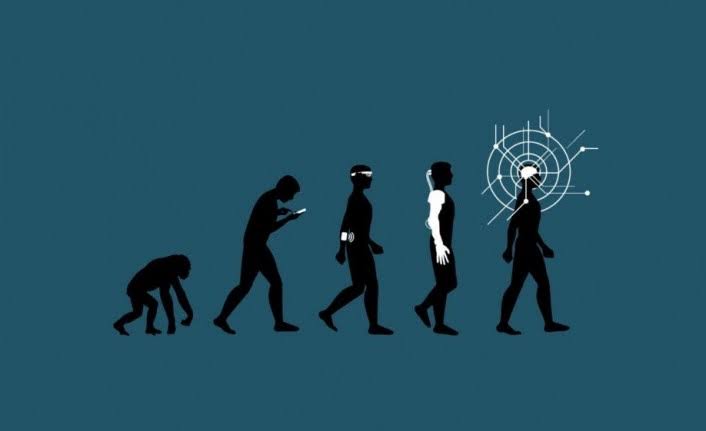
Donna Haraway's posthumanism, by contrast, isn't about enhancing the human — it's about dissolving the sharp line between human, animal, and machine altogether. That framework fits Cloudbank far better than transhumanism does. The city's technology doesn't chase immortality or cybernetic augmentation; nobody in Transistor is racing to outgrow their body. Instead, the boundaries blur in quieter ways — futuristic plant life growing directly into the city's architecture, public opinion terminals that fold individual voices into a single visible signal. Cloudbank doesn't push humans past their limits; it lets the line between human and system go soft.
Read that way, Transistor isn't a transhumanist power fantasy dressed up in cyberpunk neon. It's a posthumanist elegy — a city that adapted to its technology instead of trying to conquer it, and lost something anyway.
Closing Thought
None of Transistor's politics are loud. There's no manifesto, no message delivered straight to camera. But underneath the combat and the melancholic score is a city that quietly gets a lot right — about who gets to belong, about what strength looks like, and about what it might mean to become something other than simply "more human." That restraint is, I think, exactly why it works.