Most games use "culture" as flavor — a skin, a setting, a mood board. Sid Meier's Civilization VI does something rarer: it turns culture into the mechanic itself. You don't just visit a civilization in this game, you steer one, trade with it, learn from it, and sometimes erase it. This essay, adapted from a paper written for a course on games and culture, looks at how that happens — structurally, historically, and pedagogically.
Defining Culture, Again
As with any study of culture in games, it helps to start with what the word actually means. The Turkish Language Institution frames it as the sum of material and spiritual values a society creates and hands down through history. Cambridge's dictionary lands somewhere similar: "the way of life... of a particular group of people at a particular time." Different institutions, same center of gravity — culture is what a community values, and how it passes those values on. That's the frame worth bringing to a game literally about building civilizations.
A Board Game Made Digital
Civilization's lineage starts away from computers entirely — Francis Tresham designed the original board game in 1980. Sid Meier adapted it into the video game series in 1991, and Civilization VI is the newest entry in that line: a turn-based 4X strategy game, a label worth unpacking before going further.
Strategy games, broadly, are built around planning actions toward a win condition (Rollings & Adams, 2003). "Turn-based" means players act in sequence rather than in real time. "4X" — Explore, Expand, Exploit, Exterminate — describes a specific strategy subgenre where the player leads a nation, people, or faction against rival powers.
Explore
The player scouts territory beyond their own borders, and in doing so, learns about the civilizations they'll eventually cooperate or clash with — their heritage, their tendencies, their priorities. It's the game's first, gentlest brush with culture: information gathering, both in-fiction and at the meta level.
Expand
Claiming new territory is also a statement of intent. The choices a player makes while expanding — what to prioritize, what to leave alone — reveal something about their own playstyle and values, visible to both AI opponents and other players.
Exploit
Turning claimed land into usable resources forces a second layer of cultural decision-making: which resources matter, and how a civilization should be run to serve its people. This is where a player's in-game civilization starts to develop a coherent identity.
Exterminate
Conflict, when expansion runs out of room, becomes close to inevitable. This is the sharpest edge of the culture conversation the game sets up: incompatible values eventually meet, and the game asks what a player is willing to do to protect their own.
Put together, the 4X loop gives Civilization VI unusual range for exploring "culture" as a concept — it's built into exploration, territory, resource use, and conflict all at once.
Real Civilizations, Real History
The game's civilizations aren't generic factions — they're drawn from real history, and their in-game bonuses are built from what actually made each civilization distinct. Mansa Musa, often cited as the wealthiest individual in recorded history, is a playable leader here. His empire, Mali, was a major cultural center across both the African and Islamic worlds, controlling gold routes to the south and salt routes to the north.
That history shows up directly in the game's mechanics: Mali gets bonus religious output alongside a real economic edge, plus a unique Suguba building rooted in its own history, while working desert tiles yields extra gold — a fairly direct echo of the trans-Saharan trade that built the empire in the first place. Learning to play as Mali well means, almost incidentally, absorbing a little bit of real economic history.
Playing as a Way of Learning
That incidental learning isn't accidental from the developers' side, and some educators have leaned into it directly. Ryan Botting, a teacher in the United States, has used Civilization VI and Humankind to teach world history — treating the games the way another teacher might treat any classroom activity, to get students engaging with the material and genuinely curious about it (Robinson, 2021).
That puts Civilization VI in an interesting position: a commercial strategy game that also functions as a repeatable, replayable entry point into world history for whoever's willing to treat it that way — provided the civilizations and events it represents stay reasonably faithful to the real thing.
Culture as an Actual Resource
Beyond representation, Civilization VI makes culture a literal, trackable resource — one of the paths to victory, with its own dedicated tech-tree equivalent, the Civics tree, and its own required strategic planning.
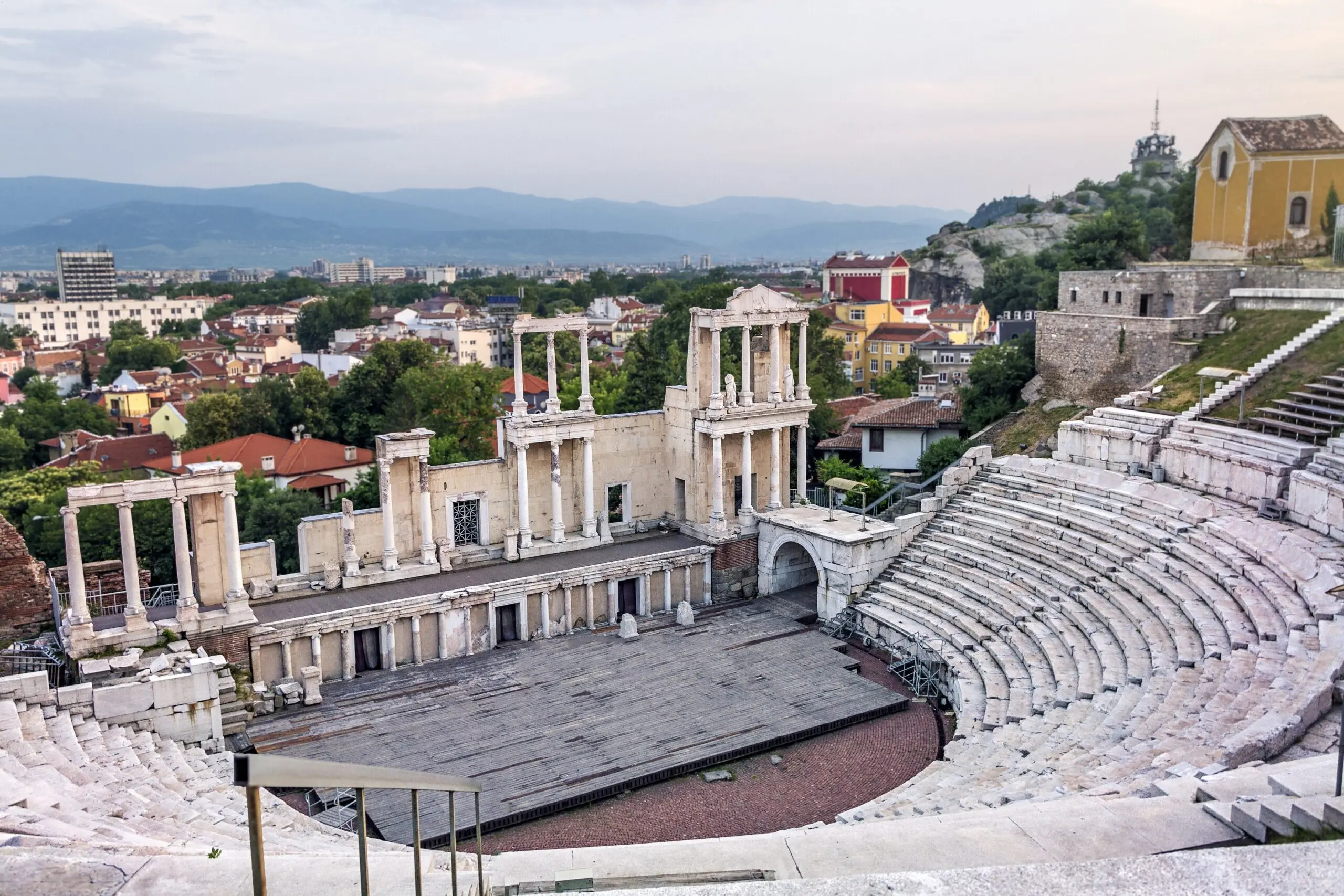
The clearest example is the Theater Square district. Physical theaters have carried cultural transmission since ancient Greece, and the game leans on that directly: building theater infrastructure generates the Culture resource, turning a real historical institution into a literal in-game production chain. It's a small design choice, but a telling one — the game isn't just referencing culture, it's modeling how culture actually gets produced and spread.
Closing Thought
Civilization VI doesn't just dress a strategy game in historical skins. Its entire structural loop — exploring, expanding, exploiting, and eventually fighting — is built to make "culture" something the player has to actively manage, interpret, and sometimes destroy. That's a rare thing for a mainstream strategy game to pull off, and it's a big part of why the series keeps finding its way into actual classrooms.